5 Chicago Datasets Every Nonprofit Should Know
Datasets That Transform How Nonprofits Serve Their Communities

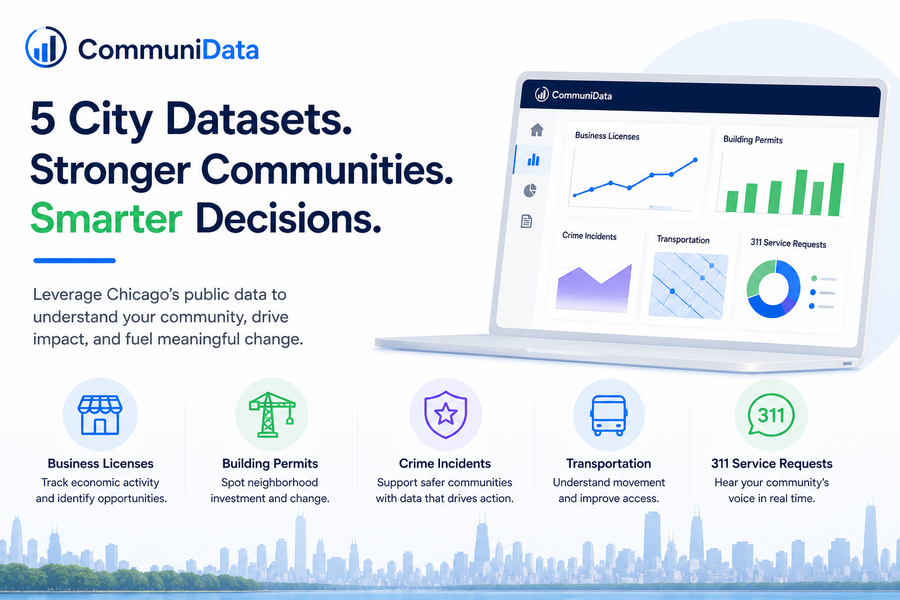
Chicago nonprofits sit at the intersection of community need and civic action, but many are missing a crucial tool for maximizing their impact: local data. While organizations excel at understanding their immediate neighborhoods through direct service, the city's wealth of public datasets can reveal broader patterns, untapped opportunities, and evidence to support funding requests.
Business License Data: Your Community's Economic Pulse
The City of Chicago's Business License dataset contains over 200,000 active licenses, creating a comprehensive map of economic activity across all 77 neighborhoods. For chambers of commerce, this data reveals which industries are thriving, where gaps exist, and how your district compares to similar areas citywide.
Consider tracking new license applications as a leading indicator of economic development. Community development organizations can use this data to identify underserved areas ripe for small business support programs, while business development groups can spot emerging industry clusters that might benefit from targeted networking events or advocacy efforts. The dataset updates monthly, making it possible to track realtime changes in your community's business landscape.
Building Permits: Reading the Signs of Neighborhood Change
Building permit data tells the story of a neighborhood's physical transformation before it becomes visible on the street. This dataset captures everything from major commercial developments to residential renovations, providing early signals of investment patterns and community needs.
For community development organizations, permit trends can inform housing advocacy strategies and help predict where displacement pressures might emerge. Chambers of commerce can use this data to anticipate infrastructure needs, identify potential new members, and advocate for complementary public investments. The key is looking beyond individual permits to identify clusters and patterns that suggest broader shifts in neighborhood dynamics.
Crime Incident Data: EvidenceBased Community Safety
Chicago's crime incident data, updated daily, offers nonprofits a factual foundation for safety initiatives rather than relying solely on perception or anecdotal reports. This granular data includes incident types, locations, and timing, enabling organizations to design targeted interventions.
Business development organizations can use this data to support requests for improved lighting or increased police presence in commercial corridors. Community groups can identify specific safety challenges such as property crimes concentrated near transit stops and develop evidence-based solutions. The data also helps organizations measure the effectiveness of their safety initiatives by tracking changes over time in specific areas or incident types.
Transportation Data: Understanding How Your Community Moves
The Chicago Transit Authority's ridership data and the city's traffic count information reveal how people move through your community, highlighting both opportunities and challenges for local businesses and residents. High traffic areas might benefit from additional commercial development, while low ridership transit stops might need community advocacy.
This data helps chambers of commerce make the case for business district improvements by demonstrating foot traffic patterns. Community development organizations can use transportation data to advocate for better transit service or identify areas where residents face mobility challenges. Understanding these patterns also helps nonprofits choose optimal locations for services and events.
311 Service Request Data: Your Community's Direct Voice
Chicago's 311 system generates thousands of service requests daily, creating a realtime record of community concerns and city responsiveness. This dataset reveals what issues residents prioritize, which areas face recurring problems, and how effectively the city addresses different types of concerns.
For community development organizations, 311 data can identify systemic issues that require advocacy or direct intervention. Business development groups can use this data to understand the operational challenges facing local businesses, from pothole complaints affecting delivery routes to requests for better street lighting in commercial areas. The data also provides concrete evidence when requesting city services or supporting grant applications.
What This Means for Community Leaders
These five datasets transform how nonprofits understand and serve their communities by replacing assumptions with evidence and revealing opportunities that might otherwise go unnoticed. When combined thoughtfully, they create a comprehensive picture of community strengths, challenges, and potential that can guide strategic planning, support funding requests, and measure program effectiveness. Explore the featured datasets on CommuniData and sign up to access additional insights and tools the platform offers.
From the Author
Curious what these datasets say about your community?
Sign up for free to access additional insights and tools specific to your community area!
Explore datasets! →