How to Generate a Report
How to Pull a Neighborhood Health Report for Your Grant Application

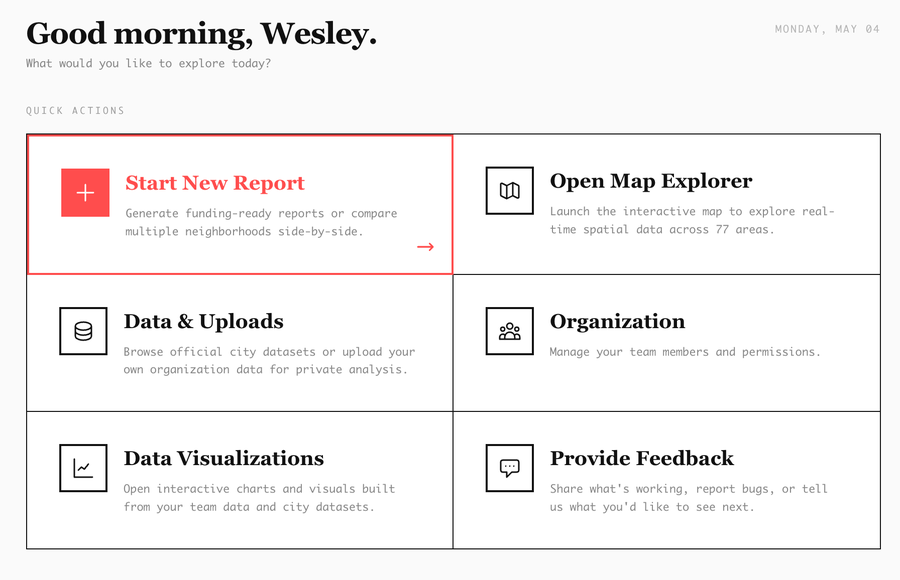
Grant applications demand compelling data to demonstrate community need, but finding reliable, neighborhood-specific health statistics often means hours of research across multiple databases. CommuniData eliminates this challenge by providing comprehensive health reports for Chicago neighborhoods in minutes, not weeks.
Why Health Data Matters in Grant Applications
Funders want to see evidence that your proposed program addresses genuine community needs. Health disparities, access to care, and chronic disease rates provide powerful justification for everything from community gardens to mental health programs. When you can show that your target neighborhood has diabetes rates 40% higher than the city average, your application immediately stands out.
The challenge has always been finding this data at the neighborhood level. Federal databases provide citywide statistics, but funders want to know about the specific blocks where you'll be working. CommuniData bridges this gap by aggregating health data from multiple sources and presenting it at the community area level that funders understand.
What's Included in a CommuniData Health Report
Each neighborhood health report includes key metrics that grant reviewers look for: life expectancy, chronic disease prevalence, mental health indicators, and healthcare access data. You'll see specific statistics like childhood asthma rates, adult obesity percentages, and the number of healthcare providers per capita.
The reports also include demographic context that helps tell your community's story. Population age breakdowns, income levels, and educational attainment data help funders understand the full picture of who you're serving. This context transforms raw health statistics into a compelling narrative about community needs.
All data comes with clear source citations, so you can confidently reference specific statistics in your application. No more wondering if your numbers will hold up to funder scrutiny – every figure is backed by reliable public health data.
How to Generate Your Report in Three Simple Steps
Creating a neighborhood health report takes less than five minutes. First, log into CommuniData and select "Start New Report" from the dashboard. This will launch the report wizard which will guide you step-by-step to create your data report.
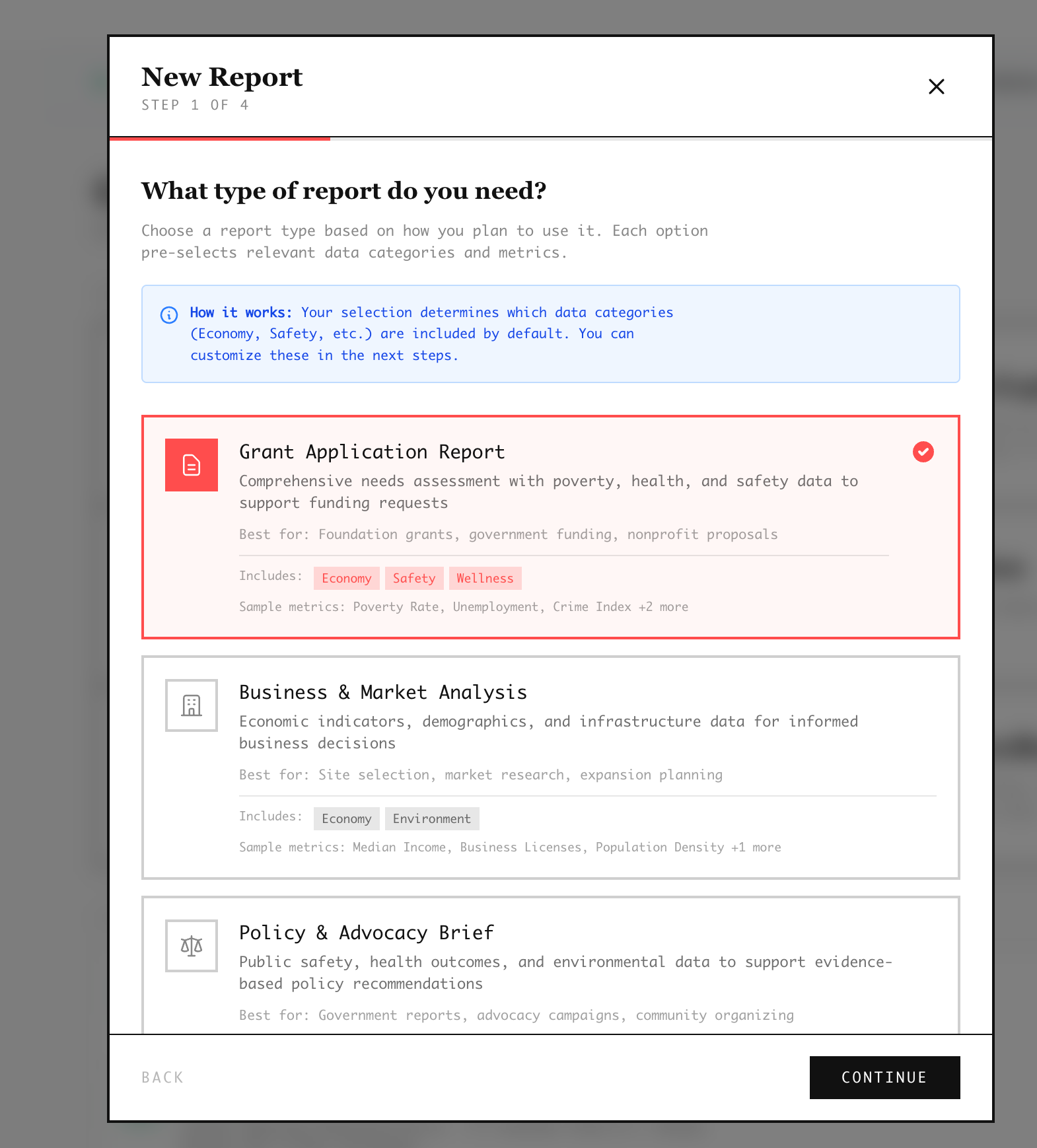
Choose your target neighborhood from the drop down list – you can select multiple areas if your program serves a broader region and you require comparative statistical analysis. Next, choose additional datasets and categories to add to the report.
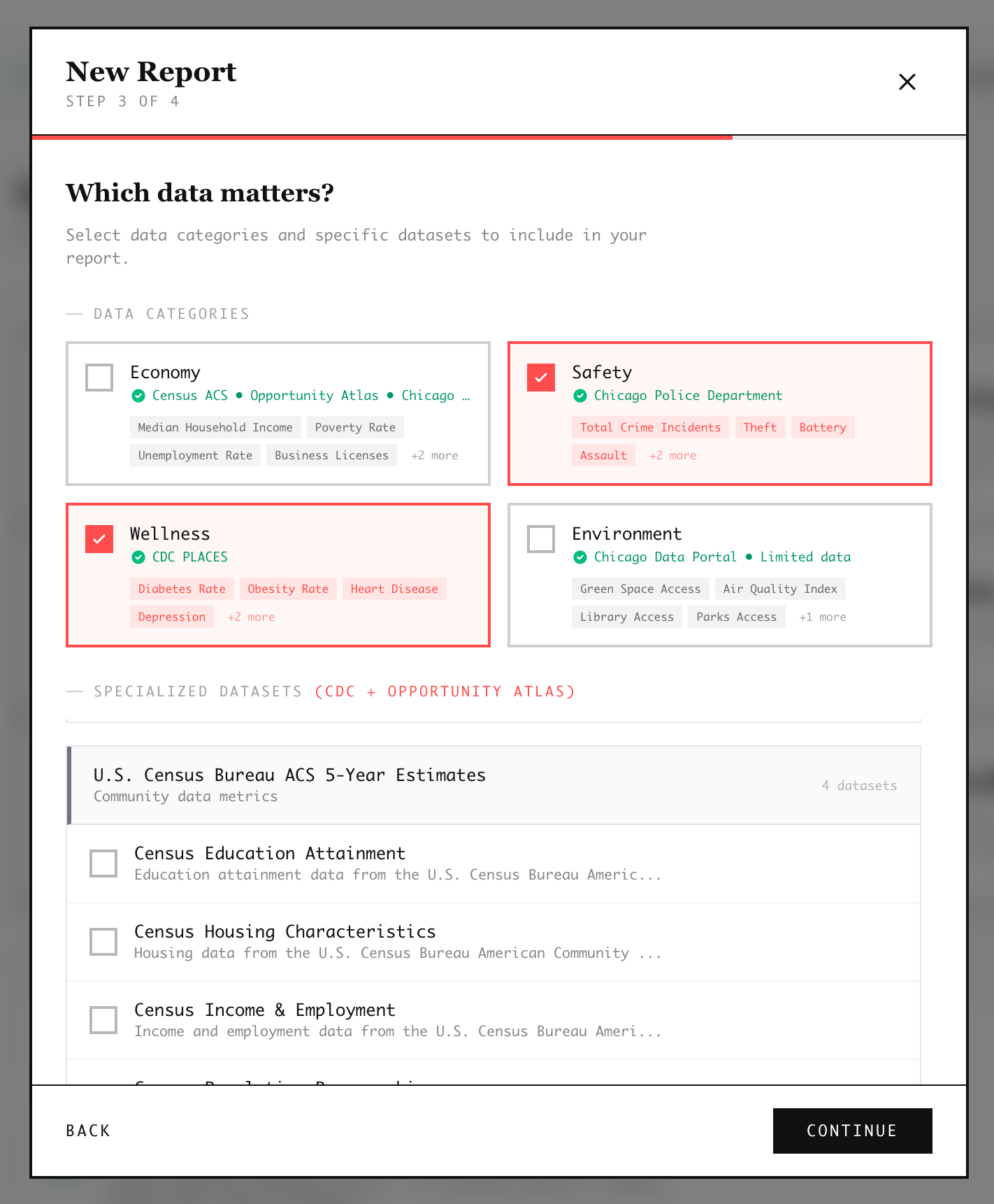
Finally, click "Build Report" and download your comprehensive PDF. The report includes executive summary bullets perfect for grant applications, detailed charts you can include as appendices, and comparison data showing how your neighborhood compares to citywide averages.
Each report costs pricing needed and provides everything you need to strengthen the community needs section of your grant application. The time saved on data collection alone pays for itself when you consider the hourly value of grant writing work.
What This Means for Grant Writers and Community Leaders
Having reliable neighborhood health data at your fingertips transforms how quickly you can respond to funding opportunities. Instead of spending days researching statistics, you can focus on crafting compelling program descriptions and building strong community partnerships.
Ready to strengthen your next grant application with solid community health data? Sign up for CommuniData today and pull a report for your neighborhood – your community's success depends on the story your data tells.